
Not long ago, I found myself thinking about the difference between want and will.
At first, it seemed simple—something we make choices from every day—but the more I sat with it, the more I realized there is a deeper conversation that should be happening inside each of us before we act.
It may help to pause for a moment and consider what we mean by those two words.
When we talk about want, we are usually describing desire—what we feel inclined toward in a given moment. Desire often rises from emotion, instinct, memory, or experience. It can feel strong, but it is also surprisingly fluid, shifting with circumstances and moods. The will, however, operates in a different space.
The will is the part of us that ultimately chooses a course of action. It is the quiet capacity within us that decides whether we will follow a desire, resist it, or move in another direction entirely. This is where we see that the will can act with our desires or against them, because it reflects intention and commitment more than impulse.
So how is it that we battle with both, and how do we know which one is supposed to win?
There are times when what we want and what we choose line up easily. Other times, they do not.
You might hear it in the quiet language of the heart: “I don’t want to do that… so I won’t.”
In that moment, desire and decision agree with one another.
But there are other moments that sound more like this: “I don’t want to do that… but I’m going to do it anyway.”
Suddenly, something deeper than desire has stepped forward. Something has taken the steering wheel of the moment. The Bible calls that place the will.
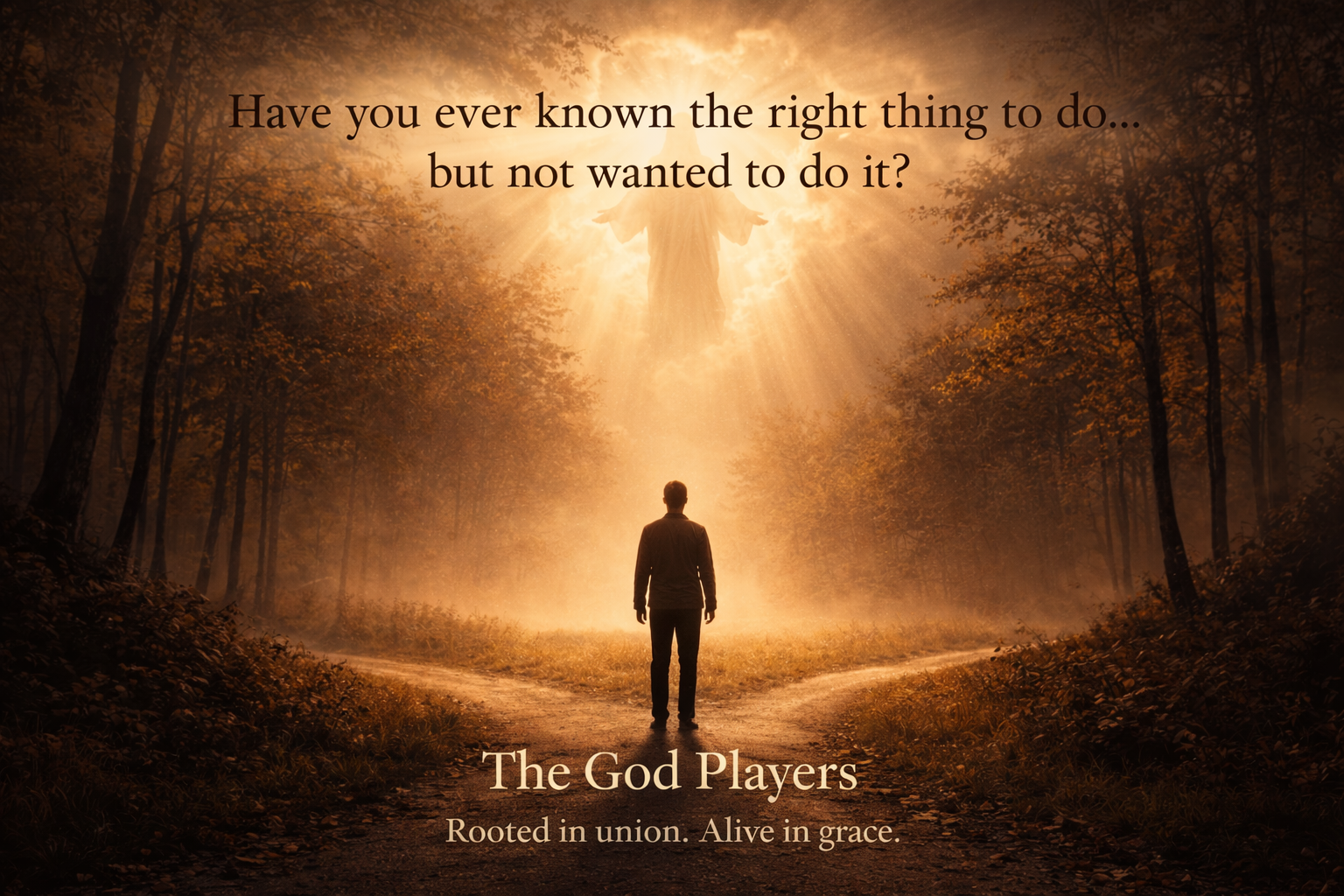
Most of us think of desire as the strongest force inside us. After all, what we want feels powerful. It pulls at us with such strength, it seems right to follow its instinct. Yet Scripture quietly shows us that desire is not the deepest authority within the human soul.
The will is.
The apostle Paul described this tension honestly when he wrote: “For I do not do the good I want, but the evil I do not want is what I keep on doing.” — Romans 7:19
Paul was not describing confusion. He was describing the very human experience of competing impulses within the heart. One part of him recognized what was good and desired it, yet another pull sometimes took the lead.
If we are honest, most of us recognize that same struggle.
There are days when we want to respond with patience but feel irritation rising instead. There are moments when forgiveness is the last thing we feel like offering. And yet sometimes, even when the desire isn’t there, we still choose the better path.
That choice is the work of the will.
Interestingly, the New Testament writers had language for this tension. One Greek word, epithymia, describes desire—the pull of something we feel drawn toward in the moment. It doesn’t always mean something sinful; it simply names the strong inclinations that rise within us.
Another word, thelō, speaks of the will—the place where intention settles into decision. Sometimes desire and will move together, but at other times they pull in different directions. When Paul wrote about doing what he did not want to do, he was describing that very conflict. Desire may speak honestly, but the deeper question remains: which voice will guide the heart?
Jesus Himself spoke to this deeper layer of decision on the night before the crucifixion. In the garden, He prayed, “Father, if you are willing, remove this cup from me. Nevertheless, not my will, but yours, be done.” — Luke 22:42
In those words, we glimpse something profound. Jesus expressed the natural human desire to avoid suffering, yet He also revealed a deeper alignment—the will that remained united with the Father.
Desire spoke honestly.
Will chose faithfully.
The Scriptures also hint that our will is not meant to stand alone. The work of God within us reaches even into this quiet center of decision. Paul later wrote, “For it is God who works in you, both to will and to work for his good pleasure.” — Philippians 2:13
That line has always fascinated me. It does not simply say God helps us act rightly. It says He works within us to will.
In other words, the transformation God brings is not only about behavior. It reaches into the deeper places where decisions are formed.
And if we are listening, over time, something remarkable begins to happen. The distance between what we want and what we choose slowly begins to close.
What once required sheer determination begins to feel natural. What once felt like discipline begins to feel like alignment. The heart starts wanting what the spirit already knows is true.
The psalmist described this process beautifully: “Delight yourself in the Lord, and he will give you the desires of your heart.” — Psalm 37:4
This verse is often misunderstood as a promise that God will grant whatever we wish. Yet the deeper meaning may be far more beautiful than that. As we learn to live close to Him, our desires themselves begin to change. The things we want gradually reflect the heart we have been given in Christ.
When that happens, the will no longer feels like a constant battle against our desires. Instead, desire and will begin moving in the same direction.
Perhaps that is one of the quiet miracles of spiritual growth.
We begin our journey constantly wrestling between what we want and what we know is right. Yet as grace reshapes us from within, the conflict softens. The heart learns new rhythms.
And slowly, almost without noticing, we discover something wonderful:
The things we once had to choose… become the things we truly want.
